



Tag Archives: cceng380
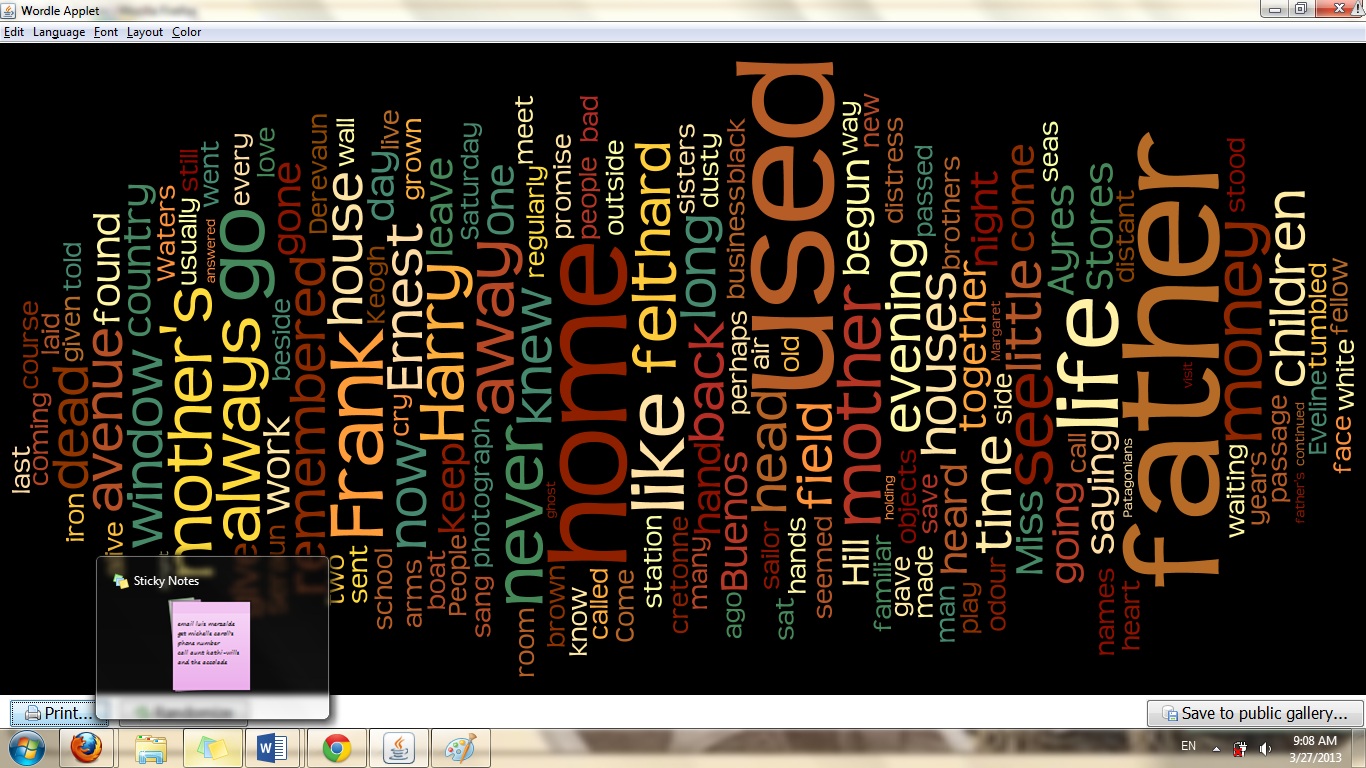
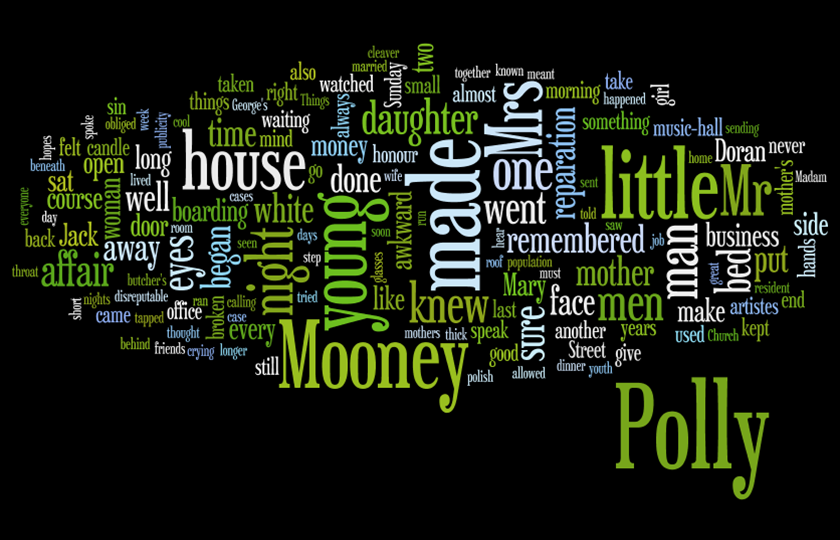
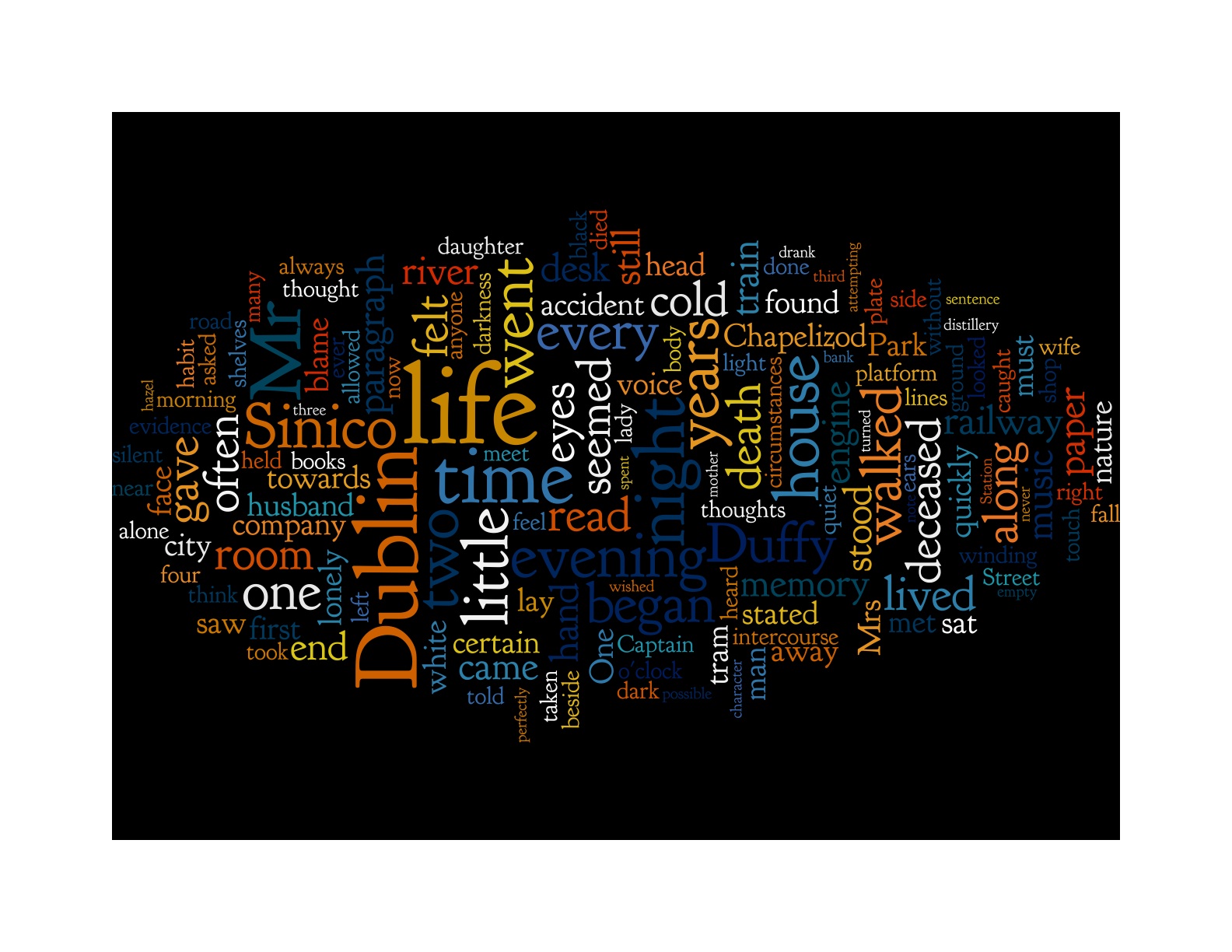
Joyce & Distant Reading
Links to the Joyce stories we will be discussing on Wednesday (“Eveline,” “The Boarding House,” “A Painful Case,” & “The Dead.”).
“The Building Debate” reading
For tomorrow’s class, please read the following (including comments if there are comments on the posts):
Who’s In and Who’s Out (Stephen Ramsay)
Mambo Italiano (Bethany Nowviskie)
In/Out, DH, Pedagogy, or Where It All Started (Katherine Harris)
On Building (Stephen Ramsay)
The Digital Humanities Is Not About Building, It’s About Sharing (Mark Sample)
Some Things To Think About Before You Exhort Everyone To Code (Miriam Posner)
Blog Assignments
Overview
You will create and maintain a WordPress blog that responds to the readings, themes, and activities of this course. A quick google search will reveal that there are *many* resources on blogging. Some of the most important basics are listed on the Blogging Tips page. Also, check out ProBlogger’s beginner guide for a thorough introduction to blogging.
In short, your blog posts should included the following:
- A title (try to be creative here–the strength of your title often determines whether or not someone will read what you have to say.
- Something to say. Many student bloggers will post only when they have to. That is, they use the blog as a way of meeting a minimum quantity of words. While this can lead to satisfactory outcomes, the really inspired (and inspiring) blogs are the ones who focus on what they are saying rather than whether they’ve reached their word counts yet. The more you blog, the better at it and more comfortable you will become.
- Links to relevant other information, sites, and or resources.
Blog Assessment
| Blog Rating | Description of Rating |
| 4 = Exceptional. | The blog entry is focused and coherently integrates examples with explanations or analysis. The entry demonstrates awareness of its own limitations or implications, and it considers multiple perspectives when appropriate. The entry reflects in-depth engagement with the topic. |
| 3 = Satisfactory. | The blog entry is reasonably focused, and explanations or analysis are mostly based on examples or other evidence. Fewer connections are made between ideas, and though new insights are offered, they are not fully developed. The entry reflects moderate engagement with the topic. |
| 2 = Underdeveloped. | The blog entry is mostly description or summary, without consideration of alternative perspectives, and few connections are made between ideas. The entry reflects passing engagement with the topic. |
| 1 = Limited. | The blog entry is unfocused, or simply rehashes previous comments, and displays no evidence of student engagement with the topic. |
| 0 = No Credit. | The blog entry is missing or consists of one or two disconnected sentences. |
Blog Rubric: Courtesy Mark Sample & Leann Hunter
Twitter Assignment
Your Twitter assignment:
- If you have not yet joined Twitter, join Twitter.
- Create a profile. In either your user name or bio (or both), use your real name. (And be sure you have filled out the bio!) Replace the Twitter egg avatar for your profile with a picture that represents you, either a picture of you or something that others can use to identify you.
- For the “Website” in your bio, enter your WordPress blog page.
- Make your profile public. if you already have a twitter account that is private and wish to keep it that way, create a new account for this class.
- Find and follow all members (students and professor) of our class. This #cceng380 list might help (Use this Twitter Help Center article “How to Use Twitter Lists,” if you run into any trouble or are confused.). And if you don’t see your account on that list, let me know!).
- Get into the habit of checking Twitter at least once a day.
- Post Tweets regularly. At least 5 times per week (and not all at once).
- Read “The Difference Between Thin and Thick Tweets,” by David Silver
- Make sure your Tweets are a combination of “thick” and “thin.”
A few general guidelines for fulfilling your Twitter assignment:
- Be interesting: post things that other people are going to want to read.
- Be interested: read what other people post. Find and follow Twitter accounts other than the ones maintained by members of this class: look for people, publications, institutions, and organizations related to your interests. Ask me if you’d like suggestions.
- Be generous: respond to others, answer questions, share helpful links.
- Use hashtags to get the most out of Twitter. Remember that that hashtag for this course is #cceng380.
- Experiment, be creative, see what the possibilities of this relatively new medium are.
- At the mid-point of the semester, you will be asked to analyze your use of Twitter by using Storify.
If you have any questions or comments, please share them below
[Adapted from “twitter assignment” on silver in sf, by David Silver & George Williams’s Twitter assignment in #wide18]